TenJet® percutaneous tenotomy for Atlanta hip tendon patients
Degenerated hip tendons cause persistent pain that often resists rest and physical therapy. Atlanta specialists now offer TenJet® percutaneous tenotomy — targeting the damaged tissue directly in a 15-minute office procedure.
Find an Atlanta Specialist About the ProcedurePatient Story
A patient who underwent the TenJet procedure describes the experience in their own words.
TenJet Patient Testimonial
Video courtesy of HydroCision, Inc., the maker of TenJet®. Individual results vary; this patient's experience is not a guarantee of outcome. Talk with a specialist about whether the procedure is appropriate for you.
Hip tenotomy using the TenJet® system is a percutaneous (through the skin) procedure that removes degenerated tendon tissue from hip tendons without open surgery. The most commonly treated tendons include the gluteus medius, gluteus minimus, and hip flexor (iliopsoas) tendons.
Patients who benefit most from hip tenotomy typically have confirmed tendinopathy on imaging, have completed a course of physical therapy without adequate relief, and prefer to avoid open or arthroscopic surgery.
TenJet® by HydroCision uses a precisely directed high-pressure saline stream to remove degenerated tissue. The procedure is performed under real-time ultrasound guidance, allowing the physician to target only the damaged tissue while preserving healthy tendon fibers.
Learn more at: hydrocision.com/product/tenjet/
Official demonstration video from HydroCision, the maker of TenJet, plus a look at how tendinitis differs from the deeper tissue degeneration TenJet is designed to treat.
TenJet Gluteal Tendinopathy Minimally Invasive Tenotomy


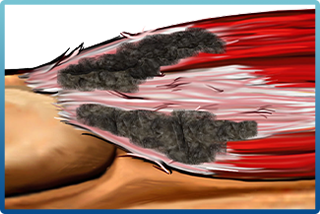
Diagrams and video courtesy of HydroCision, Inc.
Common Questions
Continuous ultrasound imaging shows the degenerated region and the needle at the same time, so the treated area is confirmed visually throughout rather than estimated in advance.
It is emulsified by the saline jet and drawn out through the same needle by an integrated suction effect, so debris is evacuated rather than left in the tendon.
Sometimes, briefly, depending on the site and extent of treatment. Published lower-limb cases describe short periods of protected weight bearing before progressing to normal walking.
Tenotomy procedures are covered by Medicare and most private insurers, though your individual plan and documentation still determine what you pay. Confirm with the practice first.
This information is general and is not medical advice. Whether any procedure is appropriate for you can only be determined by a physician who has examined you and reviewed your imaging.